Recycling and Sustainability — Hedge Trimming Queens Park
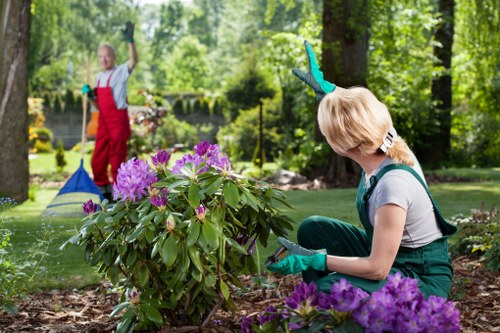 Hedge Trimming Queens Park is committed to delivering garden maintenance with a focus on sustainable rubbish gardening and an eco-friendly waste disposal area strategy. Our approach to Queens Park hedge trimming and green waste recycling emphasises source segregation, on-site minimisation and reuse where possible. We prioritise practices that reduce landfill contribution and support borough-level waste separation schemes that separate garden waste, food waste, glass and mixed recycling. By embedding sustainability in routine hedge care, we help local streets and communal gardens stay tidy while cutting carbon from yard waste operations.
We work with residents and local housing associations to raise a recycling percentage target for garden and hedge material. Our current objective is a realistic but ambitious 65% diversion rate of green arisings from landfill within two years, rising to 75% within five years through increased composting, chipping and donation of reusable materials. This target covers woody cuttings, brash, leaf litter and mixed organic matter generated during Queens Park hedge trimming operations, with ongoing monitoring to report progress and identify improvement areas.

Local Transfer Stations and Borough Collaboration
To support local disposal pathways we use nearby transfer stations and civic amenity centres managed by Brent and Westminster boroughs and partner hubs across north-west London. These borough-level facilities enable efficient sorting and processing, sending green waste to composting facilities, chipping sites or energy-from-waste where appropriate. Our logistics plan coordinates collections to reduce double-handling, ensuring garden waste is taken to the right local transfer point, including reuse centres and community compost hubs that help turn hedge cuttings into useful mulch.
Partnerships with Charities and Community Groups
We actively build partnerships with charities and non-profit reuse organisations to extend the life of useful materials from Queens Park hedge trimming. Branches suitable for craft or habitat projects, bundled brushwood for local bonfires at approved events, or larger timbers are offered to community orchards, wildlife groups and social enterprises. These collaborations reduce landfill and create local value: charities benefit from materials for training or art projects, while community gardens receive free or low-cost mulch and woodchip to strengthen soil and biodiversity.
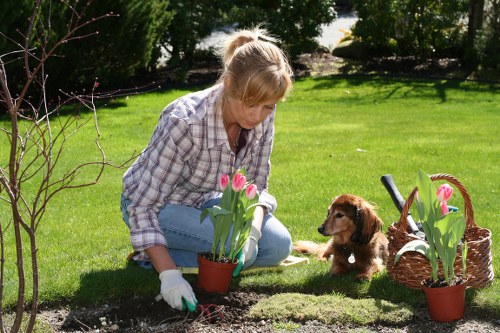 Our commitment includes scheduled donation runs to community partners and seasonal swaps with urban wildlife initiatives. We work with groups that accept plant-based materials, and with local networks that operate repair or reuse schemes. By connecting green waste recovery with neighbourhood needs we close resource loops and make sustainable hedge trimming in Queens Park practical and community-minded.
In the field, our operatives follow best practice for sustainable rubbish gardening: on-site chipping to create mulch, segregated bags for compostable materials and clear labelling to fit borough recycling categories. Typical recycling activities relevant to the area include separate collection for garden waste sacks, communal bin sorting for plastics and glass, and participation in borough food waste programmes where fine leaf litter is suitable. We also avoid contaminating green streams with non-compostable waste and use labelled containment to make transfer station processing more efficient.
 Low-carbon vans form a core part of our decarbonisation plan. We operate a growing fleet of electric and hybrid service vans for routine Queens Park hedge care runs, supported by cargo bikes for close-access streets and short trips. Reducing mileage and switching to EVs lowers emissions while demonstrating how hedge trimming in Queens Park can be both efficient and low-impact. Route optimisation, consolidated collections and scheduled drop-offs at nearby transfer stations further shrink our carbon footprint.
 Materials recovery and circular practices are built into daily workflows. We prioritise chipping on site when space permits, producing mulch that is reused in local beds, park borders and community allotments. Recyclable plastics and metal garden fixtures are separated and delivered to appropriate recycling centres. Our team also documents volumes diverted from landfill, tracking kilograms of woodchip, composted material and items donated to charities to ensure transparency against our recycling targets.
Our sustainability policy for Queens Park hedge trimming includes training staff on borough waste separation rules, encouraging homeowners to pre-sort when possible, and advising property managers on how to set up a small-scale green waste store for regular collections. We emphasise that consistent separation at source is key: when residents and contractors both follow recycling categories used by Brent and Westminster, less labour is needed at transfer stations and more material ends up being composted or reused.
We also use data-driven scheduling to identify peak seasons and hotspots for garden waste, enabling us to scale resources and donation opportunities with charities accordingly. Periodic audits help us refine our recycling percentage target and adapt routes or equipment — including broader adoption of electric vans and low-emission tools — so sustainable hedge maintenance in Queens Park stays aligned with local and London-wide environmental aims.
Outcome-focused sustainability in hedge care benefits the whole community: cleaner streets, healthier soils, reduced carbon emissions and more materials kept in local use. Our plans for eco-friendly waste disposal areas, partnerships with reuse organisations and stepped adoption of low-carbon vans make Queens Park hedge trimming a model for responsible urban gardening and green waste stewardship.